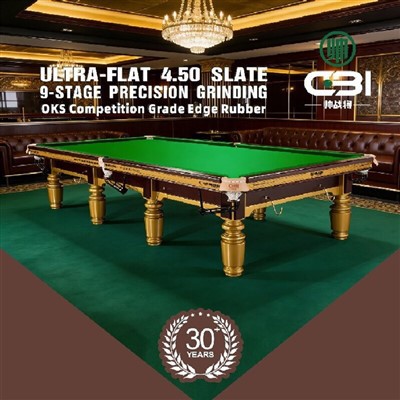
The material of a billiard table has a significant impact on the hitting effect, mainly reflected in the following aspects:
1. Rebound effect
Stone (bluestone, marble) : Stone tabletops, due to their hardness, durability and stability, can provide excellent rebound effects. After hitting the stone table, the ball can maintain a stable rebound trajectory, which is crucial for the accuracy and fairness of billiards.
Wood (oak, walnut, pine, etc.) : Although wood billiard tables feel comfortable to the touch, their rebound effect may be slightly inferior to that of stone tops. However, a carefully designed and processed wooden billiard table can still provide a relatively stable rebound effect, meeting the needs of general billiards.
Metal (steel, aluminum alloy) : The structure of metal billiard tables is solid and highly stable, but the material of the tabletop itself has a relatively small impact on the rebound effect. The rebound effect of a metal desktop mainly depends on the quality of its surface treatment and coating.
2. Stability
Stone: The stability of stone tablecloths is extremely high and they are not easily affected by external environments (such as temperature and humidity), which can ensure the stability and accuracy of billiards movements.
Wood: The stability of wood tabletops is relatively poor and they are easily affected by changes in humidity and temperature, which may cause the tabletops to deform or crack, thereby affecting the hitting effect. Therefore, when choosing a wooden billiard table, special attention should be paid to its water resistance and stability.
Metal: Metal desktops have high stability and can withstand considerable pressure and impact, making them suitable for use in environments where they are frequently used in public places.
3. Touch and comfort
Wood: The wooden billiard table has a comfortable touch and can bring players a pleasant playing experience. The texture and color of the wood also enhance the aesthetic appeal of the billiard table.
Stone: Although the touch of a stone tabletop is relatively hard, a carefully polished and treated stone tabletop can still provide a relatively comfortable playing experience.
Metal: The touch of a metal desktop may be rather stiff, but its comfort can be improved through surface treatment and coating.
4. Durability
Stone: Stone tabletops have extremely high durability and can withstand long-term use and friction without being easily damaged.
Wood: The durability of wood tabletops is relatively poor and they require regular maintenance and care. However, materials such as hardwood or synthetic wood can still offer a relatively long service life.
Metal: Metal desktops have relatively high durability and can withstand significant impacts and pressures, making them suitable for use in frequently used environments.
To sum up, the material of a billiard table has a significant impact on the effect of hitting the ball. When choosing a billiard table, one can comprehensively consider factors such as personal preferences, budget and usage environment, and select the material of the billiard table that best suits them.